

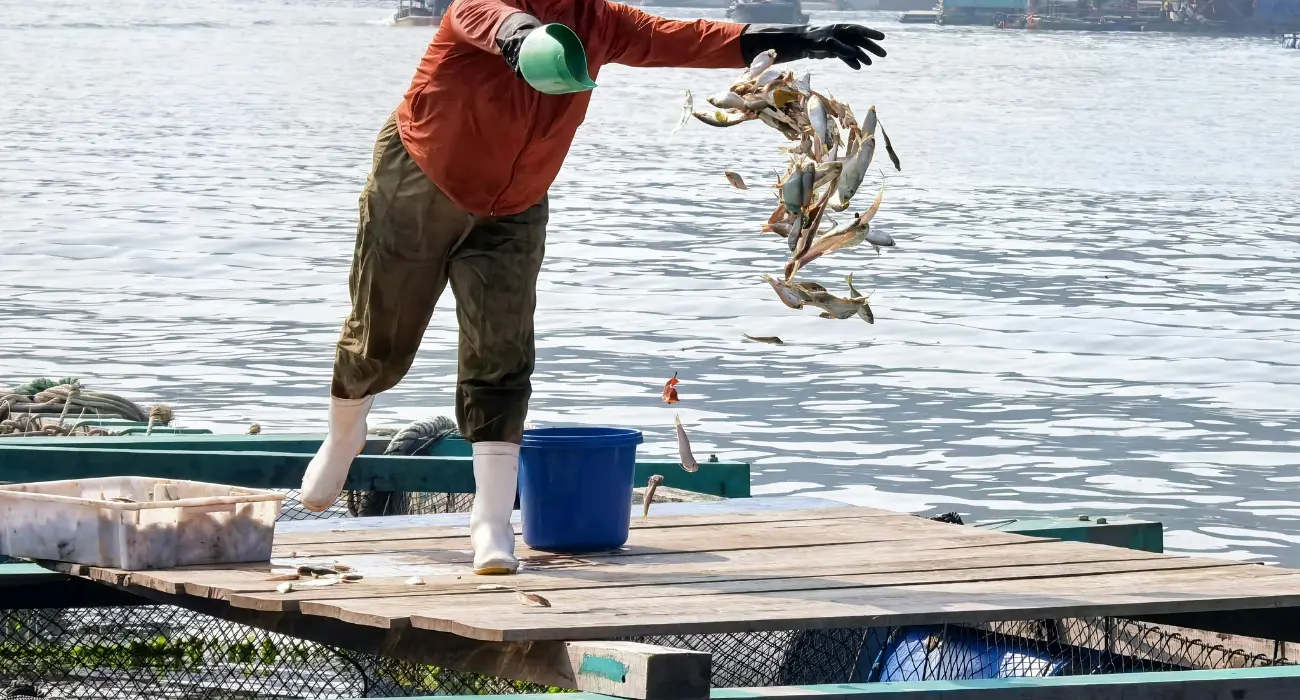
To start a fish farming business, pick one species that buyers in your area already eat, start with a small number of ponds or tanks, buy healthy fingerlings from a reputable hatchery, and manage water quality and feeding every day. Most importantly, find your buyers before harvest. Fish keep eating while you search for a market, and feed is your biggest cost.
This guide focuses on Nigeria, where catfish and tilapia farming are common, and includes the rules and context for US and UK readers.
Key takeaways
- One species, one system, one market to start. Catfish or tilapia are the usual first choices in Nigeria.
- Feed is usually the largest running cost. Track how much feed you use per kilogram of fish you sell.
- Water quality kills more fish than anything else. Test it daily.
- In England and Wales, you need Fish Health Inspectorate authorization before you set up a fish farm.
What is fish farming?
Fish farming (aquaculture) is raising fish in controlled systems for sale. Small farms usually use one of three setups:
- Earthen ponds: cheaper to build where land and water are available; good for larger volumes.
- Concrete or tarpaulin tanks: work in smaller spaces, including backyards; easier to drain and clean.
- Recirculating systems: water is filtered and reused; most control, highest cost and power needs.
Your choice depends on land, water supply, power and budget. Many Nigerian farmers start with tarpaulin or concrete tanks at home, then move to ponds once they understand growth cycles and buyers.
Is fish farming profitable? What the data says
Fish demand is real in all three countries, but domestic farm output hasn’t kept pace everywhere. Nigeria’s recorded aquaculture output has fallen over the past decade.
Falling output can mean opportunity, because buyers still need fish. It can also be a warning: costs such as feed and power have pushed some farms out. Profit depends on running a tight operation, not on demand alone.
- 80% of seafood Americans ate in 2023 came from imports, by NOAA's estimate NOAA Fisheries, 2025
- 688 million lb US marine and freshwater farm output in 2023, valued at $1.3 billion NOAA Fisheries, 2025
Rules and registration by country
Nigeria. Register the business with CAC, and contact your state ministry of agriculture or fisheries department about any local requirements for ponds and water use. If you plan to sell processed fish, such as packaged smoked fish, NAFDAC registration applies to the packaged product.
United Kingdom. In England and Wales, anyone setting up a fish, mollusc or crustacean farm must apply to the Fish Health Inspectorate for authorization using form AW1, and the FHI inspects before deciding (GOV.UK).
United States. Aquaculture is regulated mainly by states, with federal rules on water discharge, drugs and some species. Start with your state’s department of agriculture or natural resources, and the SBA’s guide to licenses and permits.
How to start a fish farming business, step by step
-
Learn first
Spend time on a working farm or take a short practical course before you spend money. Most first-cycle losses come from inexperience.
-
Choose your species
Catfish and tilapia are common first choices in Nigeria because buyers know them and they grow fast in warm water.
-
Pick the site
Reliable clean water, good drainage, security and access for buyers and feed delivery.
-
Build your system
Ponds, tanks or recirculating units, with inlets, outlets and nets. Start with a few units.
-
Buy fingerlings or juveniles
Use a reputable hatchery. Ask about survival rates and health practices, and stock at a density your system can handle.
-
Plan feeding
Buy quality feed, feed on a schedule, and weigh a sample of fish regularly to adjust rations.
-
Manage water daily
Check oxygen, temperature, pH and ammonia. Change or treat water before problems show in the fish.
-
Line up buyers early
Restaurants, fish sellers, smokers, hotels and households. Agree prices and sizes before harvest.
-
Harvest, record and restock
Record survival, harvest weight and feed used, then improve the next cycle.
How much does it cost to start a fish farm?
These are planning ranges for a small backyard or starter farm. Get local quotes, because costs vary by state and season.
| Cost item | Estimate | Basis |
|---|---|---|
| Tanks or pond construction (2–4 units) | $300–$2,000 | Planning estimate; tarpaulin tanks are cheapest |
| Water supply (borehole share, pump, pipes) | $200–$1,500 | Planning estimate |
| Fingerlings or juveniles (first stock) | $100–$500 | Planning estimate; depends on quantity and size |
| Feed for the first cycle | Often the largest cost | Budget from the worked example below |
| Water testing kit, nets, scales | $50–$200 | Planning estimate |
| Backup power for pumps | $200–$1,000 | Planning estimate |
| UK farm authorization | Apply to the FHI | GOV.UK |
Harvest maths: a worked example
Illustrative numbers for one catfish cycle. Replace every figure with your own quotes, survival rate and local prices.
- Stock 1,000 juveniles. Assume 85% survive: 850 fish.
- Average harvest weight 1.2 kg: 850 × 1.2 = 1,020 kg of fish.
- Assume a feed conversion ratio of 1.2 (1.2 kg feed per 1 kg of fish): 1,020 × 1.2 = 1,224 kg of feed.
- Feed at 1,000 per kg: 1,224,000
- Juveniles at 150 each: 150,000
- Water, power, labor and other costs for the cycle: 300,000
- Total cost: 1,674,000, so 1,674,000 ÷ 1,020 = about 1,641 per kg
- Sell at 2,500 per kg: 1,020 × 2,500 = 2,550,000. Profit: 2,550,000 − 1,674,000 = 876,000 for the cycle.
Now test the risks. If survival drops to 60%, you harvest 600 × 1.2 = 720 kg, and fixed costs per kilogram climb fast. If feed prices rise 20%, feed alone becomes 1,468,800. This is why record-keeping and buyers lined up in advance matter so much.
How to sell your fish
- Pre-sell. Tell restaurants, fish sellers and smokers your harvest date and sizes weeks ahead. Take deposits for reserved quantities.
- Offer value-added options. Live, fresh, smoked or dried fish reach different buyers and prices. Packaged processed fish needs the right registration.
- Be easy to find. People search “fresh catfish near me” or “fish farm in [city].” A Google Business Profile with photos and a phone number helps; see our local SEO work.
- Stagger stocking. Stock a new tank every few weeks so you have fish to sell every month, not one big glut.
- Know your buyer. Restaurants want steady sizes and weekly supply; smokers want volume at a lower price; households want convenience. Pick a target market and plan harvest sizes around it.
Common mistakes new fish farmers make
- Skipping the learning phase. Reading about fish farming is not the same as handling a sick pond at 6 a.m. Work on a farm first.
- Cheap fingerlings. Poor stock grows unevenly and dies more often. Pay for a reputable hatchery.
- No backup for pumps and aeration. A power cut on a hot night can kill a tank. Plan backup power before you stock.
- No records. Without feed, mortality and weight records, you can’t tell why a cycle lost money.
Farmers who struggle to sell usually started marketing at harvest. I'd start the conversation the day you stock. Tell restaurants and fish sellers which sizes you'll have and when, keep a simple contact list of every buyer, and send a message before each harvest. A short, reliable list of repeat buyers is worth more than a busy social media page.
Myth vs fact
- MythFish farming is passive income. Stock the pond and come back at harvest.
- FactFish need daily feeding, water checks and protection from disease and theft. Most losses come from skipped routine checks.
- MythMore fish per tank means more profit.
- FactOverstocking lowers oxygen and raises disease risk. Stock at a density your system and water supply can handle.
- MythYou'll find buyers easily at harvest.
- FactMany first-time farmers struggle to sell at once and keep paying for feed while they wait. Line up buyers before harvest.
Before you stock your first fish
- Practical training or farm visit completed
- Water source tested and reliable
- Tanks or ponds built, with drainage and nets
- Hatchery chosen and references checked
- Feed supplier and feeding plan in place
- Water testing kit and daily log ready
- At least three buyers who've agreed to buy at harvest
- Authorization or registration done for your country
Frequently asked questions
Is fish farming profitable in Nigeria?
It can be, when survival is high, feed is well managed and buyers are lined up before harvest. Feed cost and fish deaths are the two biggest threats to profit, so keep daily records and compare each cycle.
How long does it take to grow catfish to market size?
It depends on the size you stock, feed, water temperature and target harvest weight. Ask your hatchery and local farmers for typical cycle lengths in your area, and weigh samples regularly so you know when fish reach the size buyers want.
Can I start fish farming at home?
Yes. Many farmers start with tarpaulin or concrete tanks in a backyard. You need a reliable water supply, a way to drain and replace water, and enough space to keep fish at a safe density.
Which fish is best for beginners?
In Nigeria, catfish and tilapia are common choices because local buyers know them and they tolerate warm conditions. Choose the species your target buyers already purchase.
Do I need a license to start a fish farm in the UK?
Yes. In England and Wales you must apply to the Fish Health Inspectorate for authorization before setting up a fish farm. Scotland and Northern Ireland have their own arrangements.
Next step
Visit two working fish farms this month and ask about their survival rates, feed costs and buyers. Then write a one-page plan for one cycle using the worked example above, test your business model, and plan how you’d scale once a cycle works.