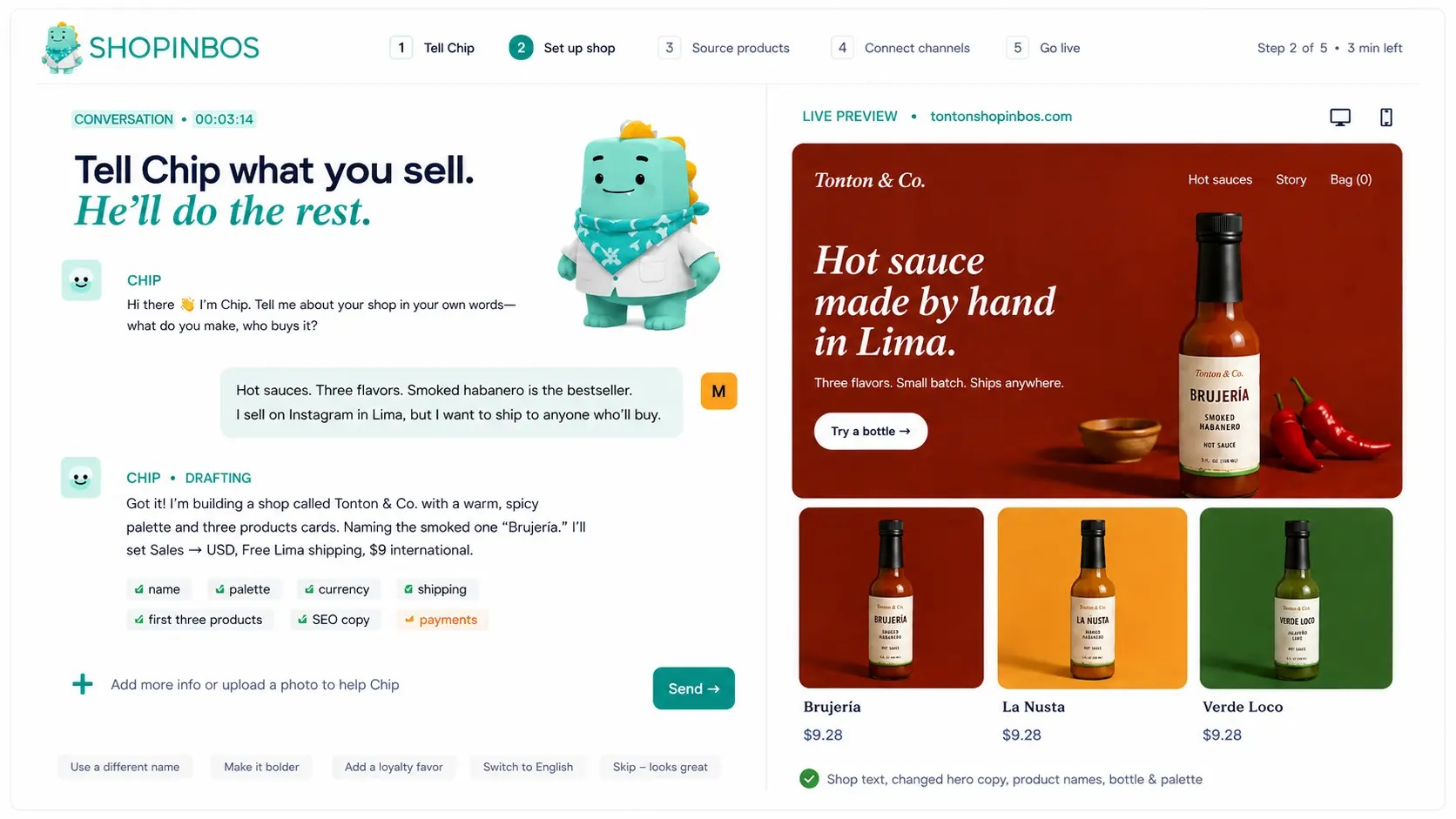
Shopinbos is an e-commerce toolkit built to help first-time sellers cut through the guesswork of launching and running an online store. With a growing base of over 2,500 active sellers and tools to discover verified suppliers and trending products, they were solving the right problem but feeling friction in converting interest into real revenue growth. Techdella stepped in to help clarify how their value proposition translated into higher conversions and stronger user outcomes.
The Problem
Shopinbos had a compelling collection of tools and data, yet many visitors dropped off before becoming active sellers. Founders and aspiring merchants were overwhelmed by platform choices, supplier selection, and unclear next steps. That meant traffic was not translating into reliable store launches or long-term seller engagement. Ultimately, the growth levers were not aligned with the way users actually moved from curiosity to action.
In practice, this usually breaks when products and tools are available, but the path to impact feels confusing and disjointed.
What Was Breaking
What was really breaking was the narrative. Shopinbos had strong utility, but the messaging and funnel did not guide users step by step toward what actually moves the needle: starting and operating a profitable store.
More specifically:
- Users landed on the site without a clear understanding of the first meaningful action to take.
- Key features were presented alongside each other, rather than sequenced according to user intent.
- Promises of tools and suppliers did not always connect to why those tools mattered right away.
This is a common pattern in e-commerce platforms: great resources, poor prioritization.

Our Approach
If this were our product, our first focus would be on simplifying the user decision journey. We did not start by redesigning the homepage or launching new tools. We started by asking one question: What should a potential seller do within their first five minutes on the platform?
From that question, we designed a more deliberate content and funnel structure:
- Clarify the landing message so it matches a concrete user problem (e.g., “Find your first winning product in one session”).
- Sequence the core steps so users see a clear path: discover → choose supplier → set up store → start selling.
- Align internal content and CTAs to highlight outcome-oriented actions instead of feature lists.
This approach avoided buzzwords and focused on real decisions a founder or seller needs to take.
Implementation in Practice
In practice, we worked closely with the Shopinbos team to adjust how content and flows were structured, both on landing pages and within onboarding:
- Refined copy on key pages to focus on the end decision users wanted (e.g., start selling in 48 hours).
- Placed clearer directional cues on product discovery, supplier connection, and tools that support revenue decisions.
- Reviewed calls to action and in-page flows to reduce hesitation and friction.
While images, dashboards, and visuals were handled by the content team, we made sure the copy reflected the seller’s journey from confusion to confidence.
Outcomes and Impact
The biggest shift was in user clarity and early engagement quality. Once the language and flows focused on specific decisions instead of broad feature promises:
- Sellers moved more consistently from landing pages into onboarding.
- Early user actions (like selecting products or suppliers) became more predictable and structured.
- Support inquiries shifted from “where do I start?” to “how do I optimize the next steps?”
In many early-stage networks, this shift matters more than raw traffic. It means fewer drop-offs and more actual revenue focus among users.
Key Takeaway
If your product helps people navigate complexity, don’t assume they will figure it out on their own. Start with their first decision, not with your features. That alignment between problems and what to do next is what moves engagement toward real business outcomes.